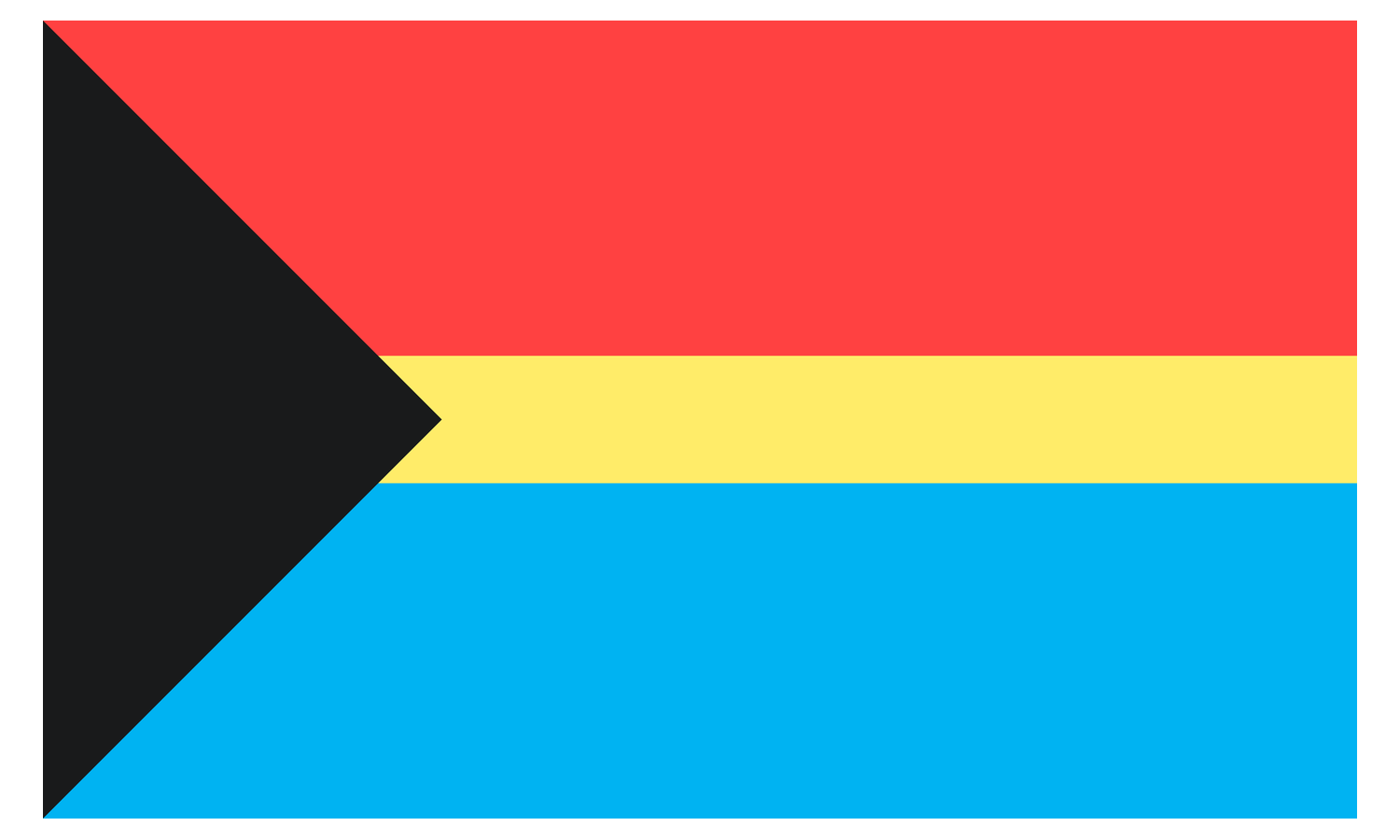
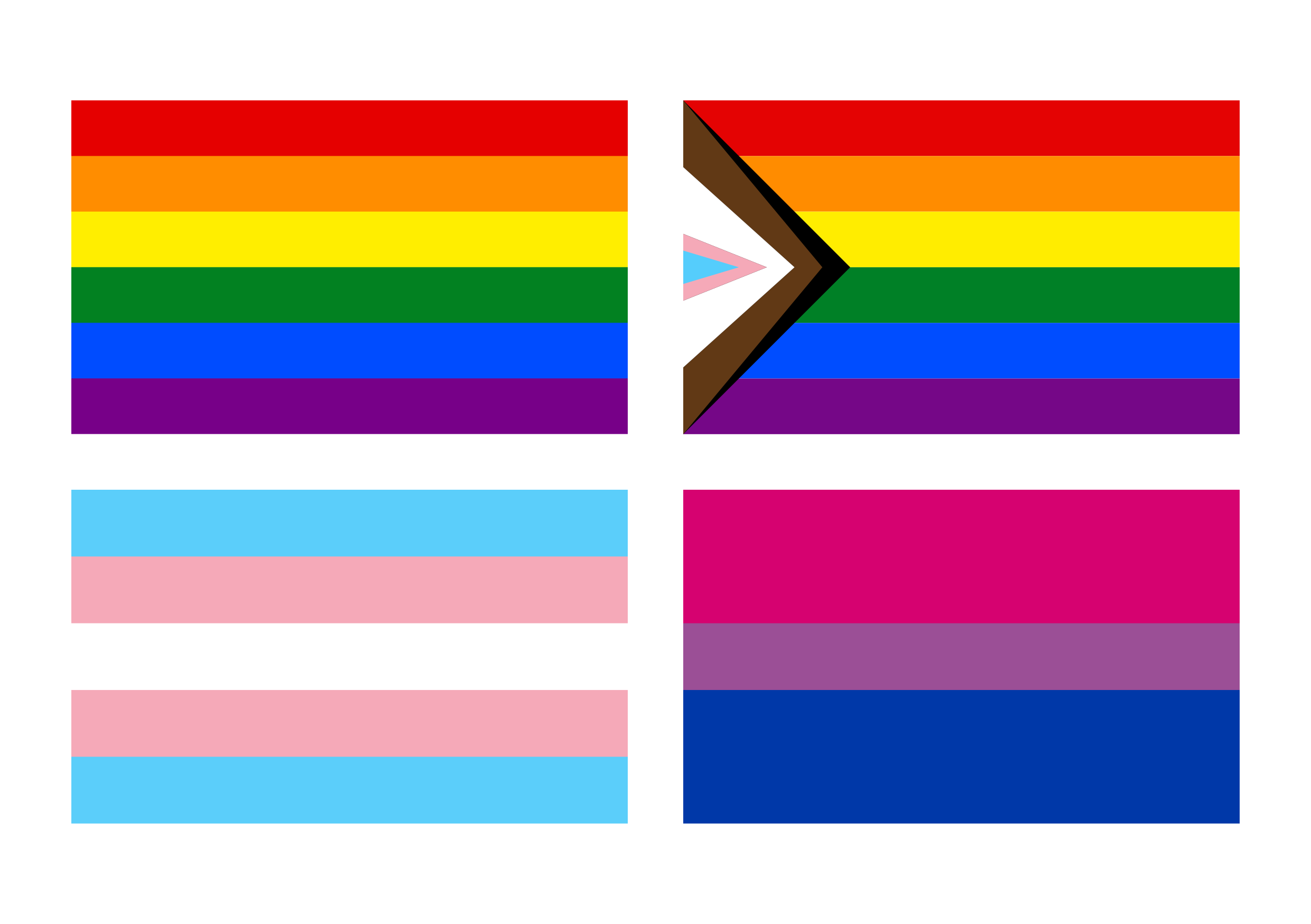
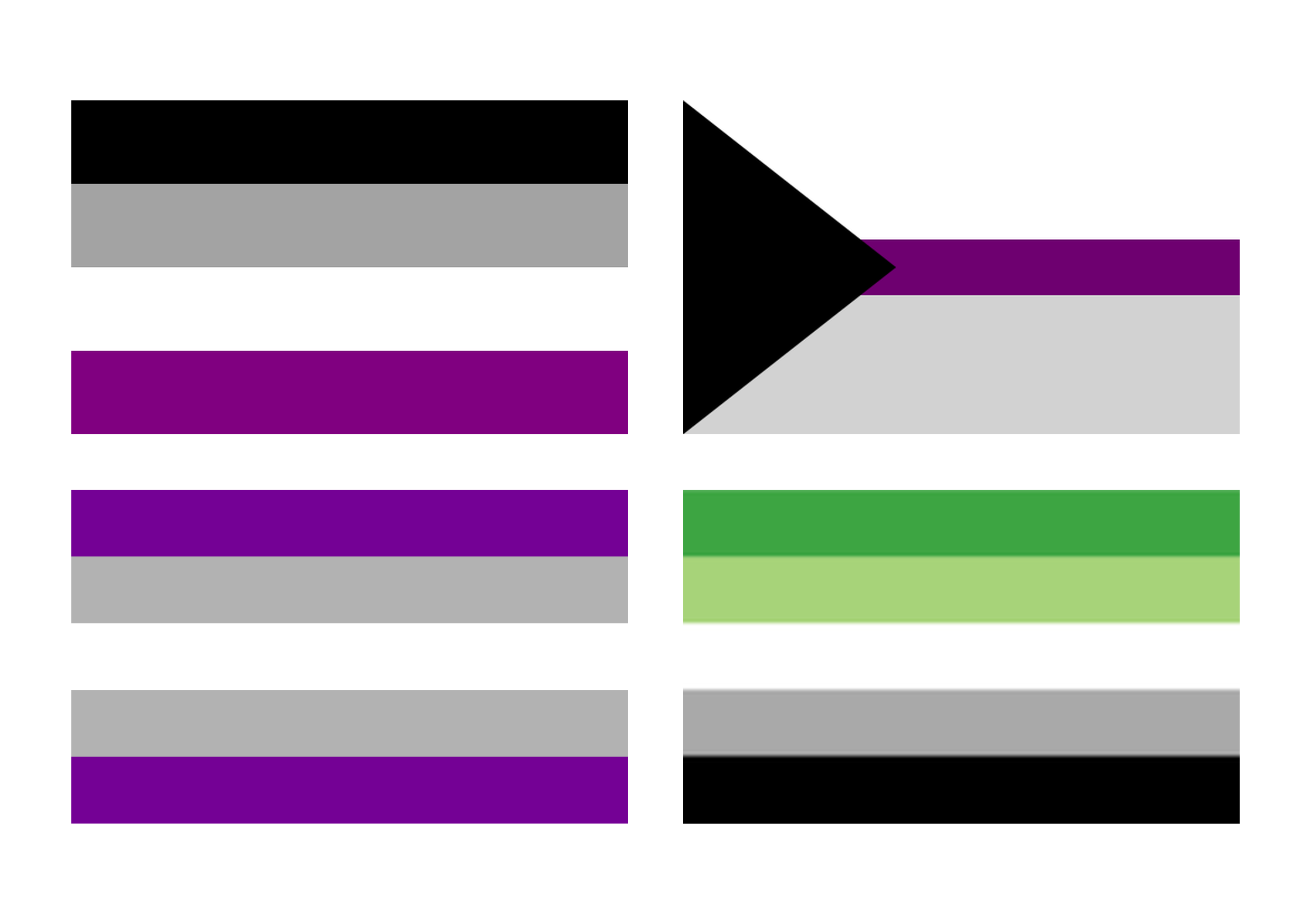
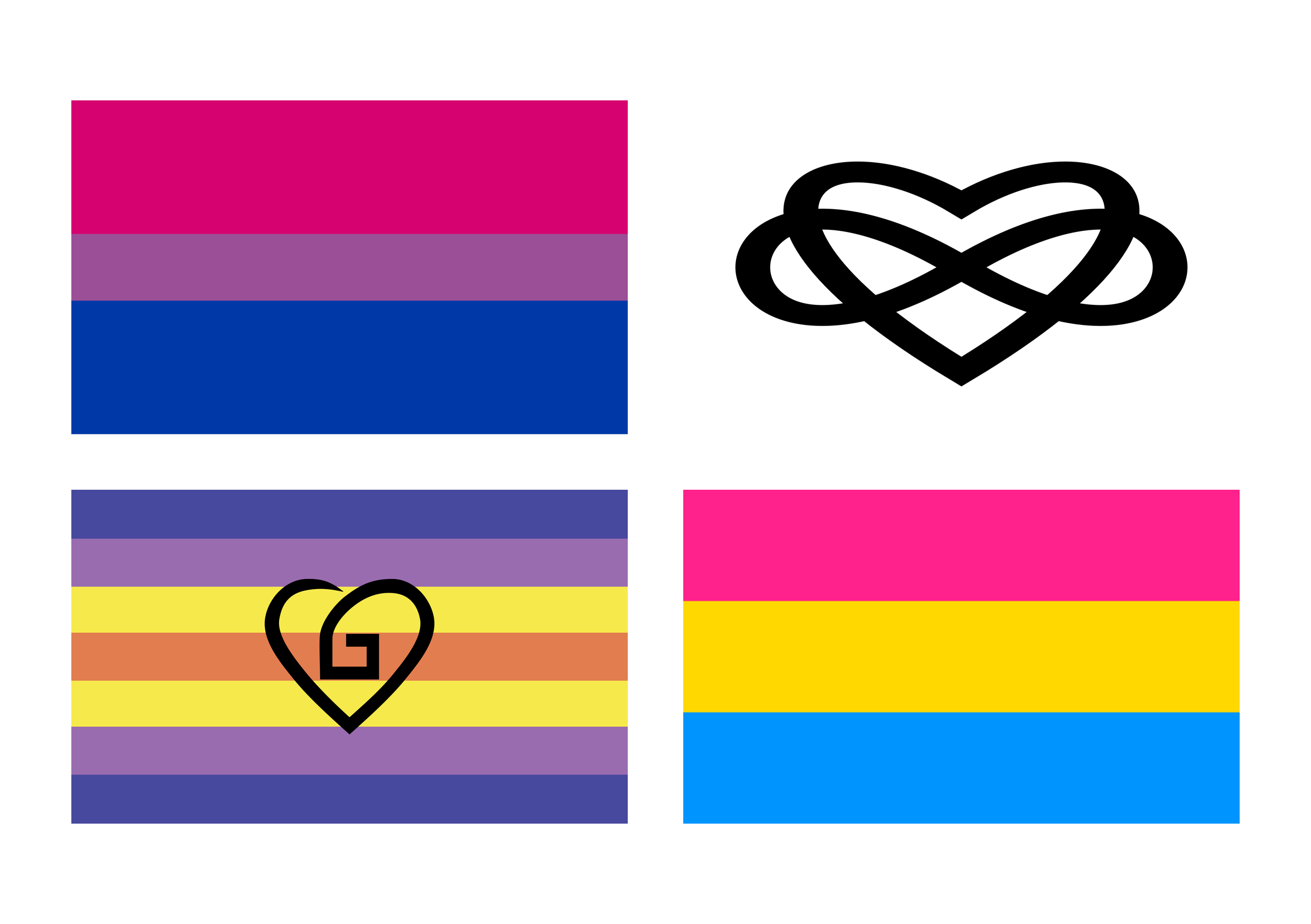
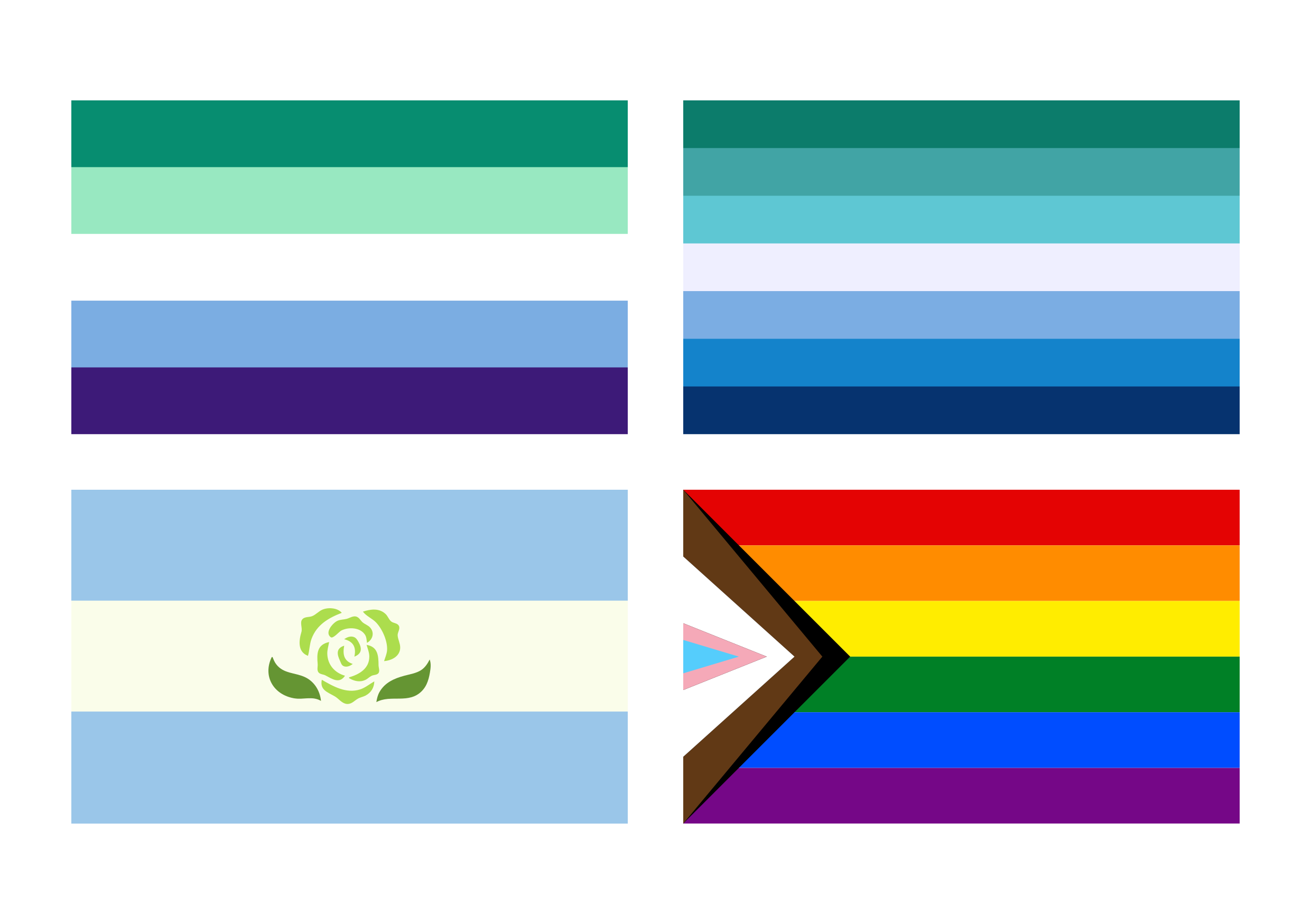
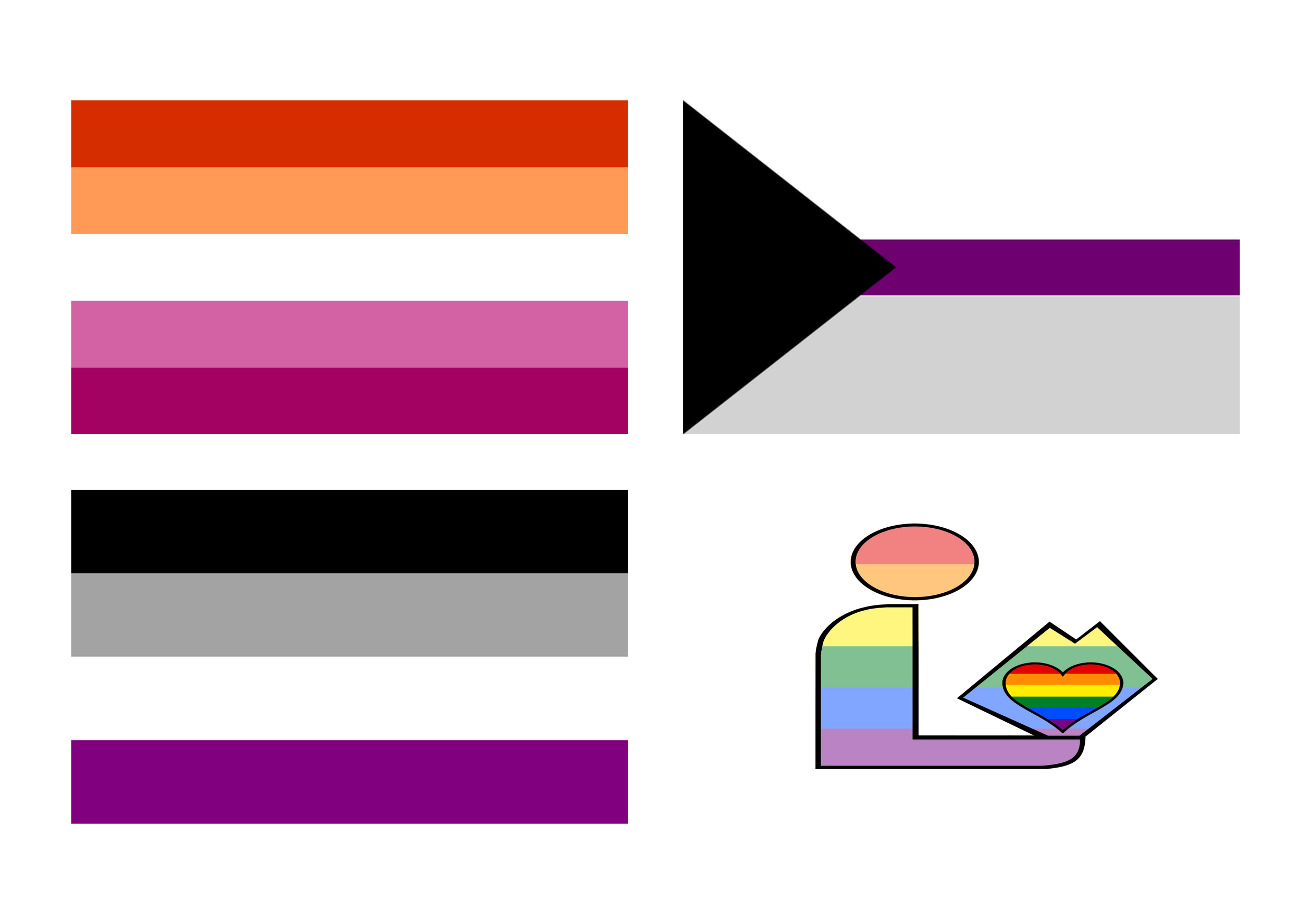
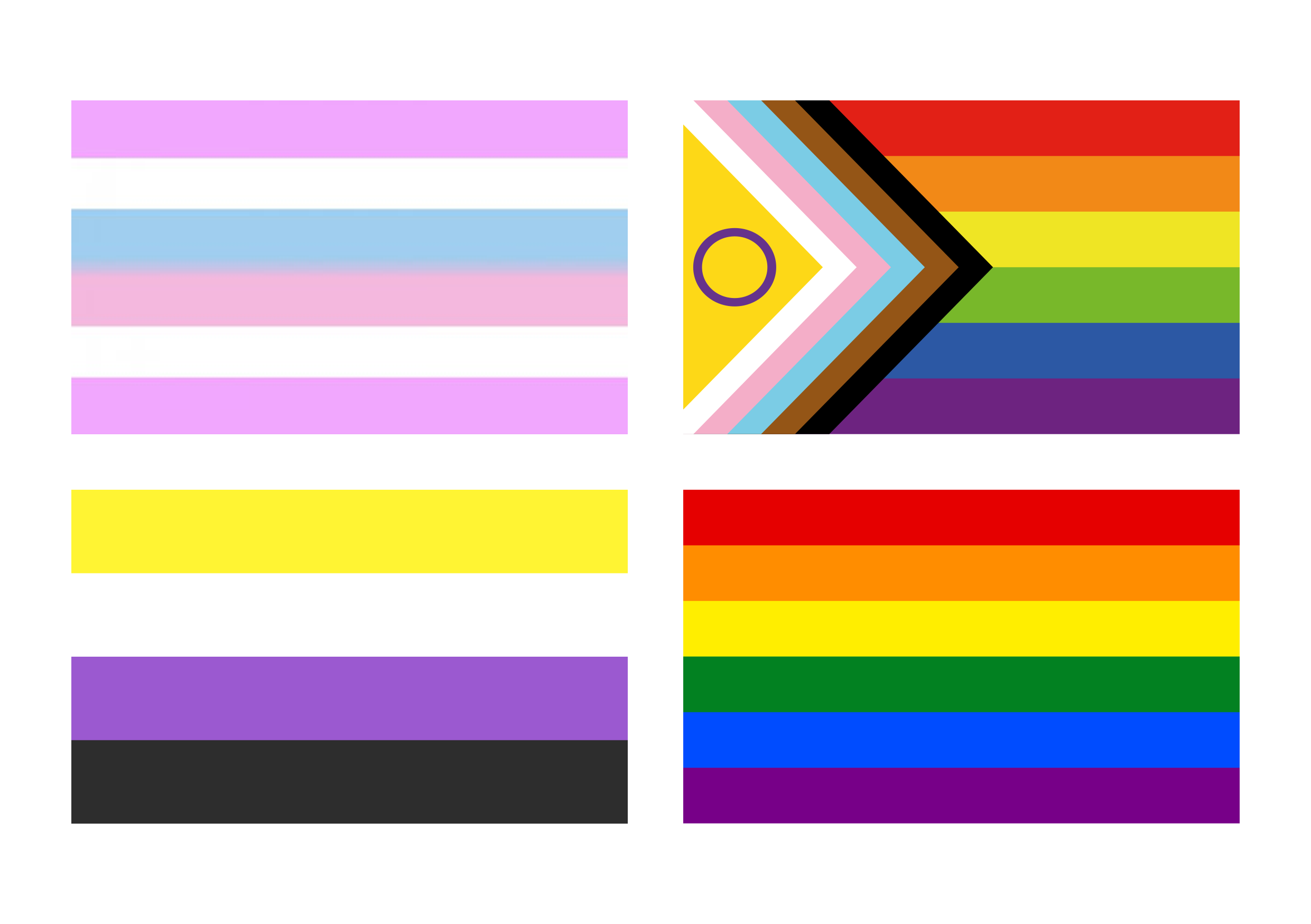
These colors represent important ideas connected to this flag and community.
History
The Polissexual pride flag emerged from online LGBTQ+ communities as a symbol for individuals who experience attraction to multiple genders. Polissexuality differs from pansexuality in that it acknowledges specific gender preferences rather than gender-blindness. The flag's three horizontal stripes use pink, purple, and blue to represent different aspects of attraction. While the exact origins and designer remain undocumented in mainstream sources, the flag gained visibility primarily through digital communities and online forums rather than through organized design campaigns. It reflects the broader post-2000s expansion of pride vexillology, where communities created flags to represent increasingly specific orientations and identities. The flag has seen modest adoption within Portuguese-speaking LGBTQ+ communities and online spaces, though it remains less widely recognized than major orientation flags.